
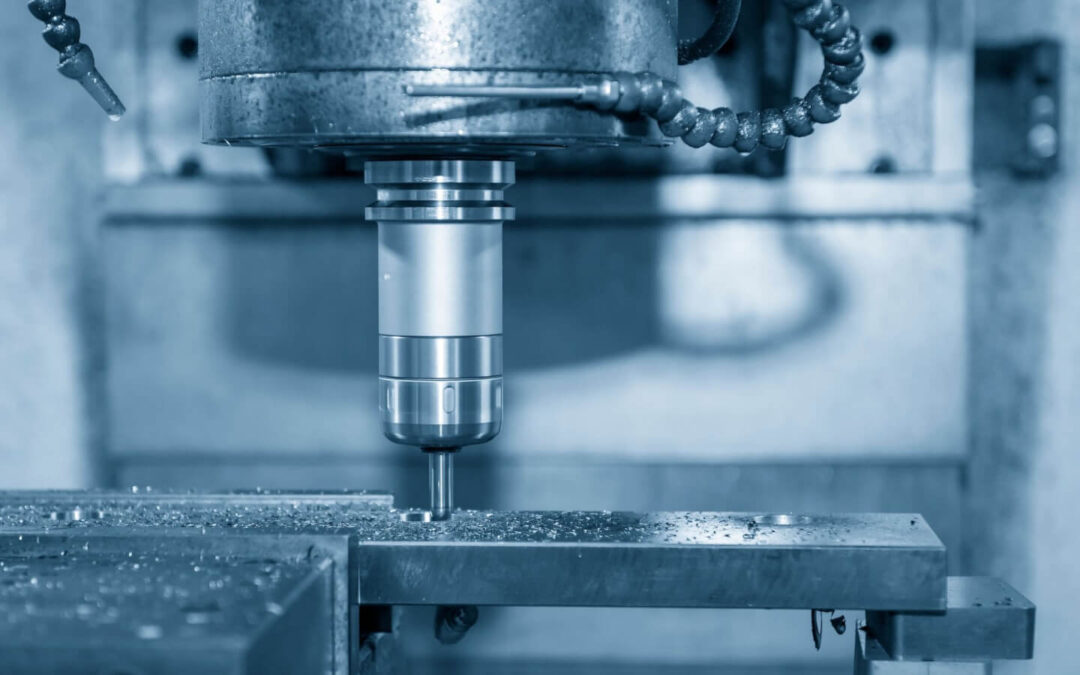
Precision CNC chamfer profiling has become a critical machining capability in modern turbine manufacturing, especially for high-stress dovetail interfaces found in gas turbines, jet engines, and power-generation systems. These interfaces serve as the primary mechanical connection between turbine blades and the rotor disc, enduring extreme centrifugal forces, cyclic thermal loads, and vibrational energy during operation. Because of the demanding environment in which turbine components function, even the smallest deviation in chamfer geometry can compromise blade seating, introduce stress concentrations, or accelerate fatigue cracking. Precision CNC chamfer profiling ensures that dovetail edges, relief angles, and contact surfaces meet the exact geometric specifications required for secure and reliable blade retention. This process is fundamental not only to improving the mechanical performance of turbine assemblies but also to extending component lifespan, optimizing aerodynamic efficiency, and reducing the risk of catastrophic failure. As turbine technologies continue to evolve toward higher thrust output, greater temperature resistance, and improved fuel efficiency, the importance of accurate chamfer profiling becomes even more strategically significant for manufacturers across aerospace, energy, and industrial markets.
One of the core challenges in machining turbine dovetail interfaces is achieving uniform chamfer geometry across complex, curved, or multi-angle surfaces. Dovetails are rarely simple linear shapes; they include intricate transitions, tight radii, and variable contact zones that must be machined with consistent depth, angle, and edge quality. Precision CNC chamfer profiling utilizes advanced multi-axis machining configurations to deliver toolpath control capable of navigating these complex geometries. CAM systems generate specialized chamfering strategies that maintain constant tool-to-surface engagement, allowing the machine to blend chamfers seamlessly across curved profiles without undercutting or over-machining critical load areas. This precise control is essential for preventing localized stress concentrations that could propagate micro-cracks under high rotational cycles. Because turbine components operate in extreme conditions exceeding hundreds of megapascal stress levels and temperatures up to 1,500°C, the slightest geometric flaw in the dovetail can reduce structural integrity. Precision chamfer profiling eliminates these risks by creating smooth, repeatable contact surfaces that distribute mechanical loads evenly across the dovetail interface, ensuring optimal retention of turbine blades during peak engine performance.
Material behavior adds another layer of complexity to chamfer profiling for turbine dovetails. Turbine discs and blades are typically made from advanced alloys such as Inconel, titanium, and nickel-based superalloys, all of which offer exceptional strength and thermal resistance but present significant machining challenges. These materials tend to harden rapidly during cutting, produce short and abrasive chips, and retain heat for extended periods. Precision CNC chamfer profiling addresses these issues through optimized machining parameters, including controlled feed rates, reduced cutting speeds, and multi-step chamfering passes that balance cutting force with thermal stability. High-pressure coolant systems further improve the machining process by delivering targeted cooling to the chamfer zone, preventing thermal warping and maintaining material microstructure integrity. Cutting tool selection is equally important: carbide tools with reinforced edges, ceramic inserts for high-temperature operations, and coatings like AlTiN or TiAlN are commonly used to enhance tool durability and preserve cutting sharpness. By managing these variables effectively, CNC machines can produce consistent chamfer quality on challenging materials without compromising fatigue resistance or structural reliability. This level of precision ensures that the dovetail interface can withstand repetitive loading cycles throughout thousands of engine operating hours.
As modern turbines advance toward higher bypass ratios, increased power density, and more aggressive operating conditions, the dovetail interface must be machined with tighter tolerances than ever before. Chamfer profiling plays a vital role in ensuring that blade insertion, seating, and locking mechanisms function smoothly without inducing unnecessary wear or galling. CNC chamfer profiling enables manufacturers to create tailored chamfer profiles that match specific blade root designs, whether hook-type, fir-tree, or serrated dovetails. These profiles must deliver optimal load-sharing across the contact surfaces while allowing efficient assembly and disassembly during maintenance cycles. Multi-axis CNC machining offers the flexibility to apply custom chamfer angles at varying depths across the dovetail contour, ensuring that each section of the blade root engages the rotor disc precisely as intended. Moreover, innovations in digital twin simulation allow engineers to model chamfer stress distribution digitally before machining begins, refining toolpaths and optimizing chamfer geometry based on real-world loading scenarios. This integration of simulation, CNC control, and advanced tooling results in dovetail interfaces that maintain structural integrity under extreme turbomachinery conditions, contributing to increased engine efficiency, reduced maintenance downtime, and safer operational performance.
Surface integrity is another crucial factor influenced by chamfer profiling in high-stress dovetail applications. Chamfered surfaces must be free of micro-burrs, tool marks, and thermal-induced distortions that could compromise the fit or long-term durability of the turbine blade. Precision CNC chamfer profiling ensures superior surface quality by incorporating finishing passes, optimized cutting angles, and adaptive toolpath smoothing technologies that reduce vibration and improve edge consistency. Modern CNC machines equipped with in-process metrology systems can measure chamfer depth and angle in real time, correcting dimensional drift and ensuring profile accuracy across the entire batch. This capability is especially critical in aerospace manufacturing, where turbine components undergo rigorous inspection protocols and must comply with strict airworthiness standards. Improved surface integrity also reduces fretting wear between the blade and disc during operation, helping maintain efficient energy transfer and minimizing the risk of crack initiation in high-stress areas. By ensuring a smooth, uniform surface finish, CNC chamfer profiling directly contributes to improved fatigue life and enhanced reliability of turbine assemblies operating under intense mechanical and thermal stress.
Ultimately, precision CNC chamfer profiling for high-stress turbine dovetail interfaces is an indispensable machining solution that supports the demanding performance requirements of cutting-edge turbine systems. The combination of advanced multi-axis machining, optimized cutting parameters, robust tooling technology, and intelligent process monitoring enables manufacturers to produce chamfer features that meet uncompromising aerospace and industrial standards. As turbines continue pushing the limits of thermal efficiency, power output, and mechanical reliability, the accuracy of dovetail chamfering will remain a key determinant of overall engine performance. Manufacturers who invest in precision chamfer profiling gain a significant competitive advantage, achieving higher quality, reduced operational risk, and improved engineering consistency across all compressor and turbine stages. With the rapid evolution of CNC technology, including machine-learning-based parameter optimization, real-time adaptive control, and simulation-driven toolpath planning, the future of chamfer profiling promises even greater scalability, accuracy, and process stability. This ensures that turbine dovetail interfaces remain robust, efficient, and aligned with the next generation of turbomachinery performance demands.