
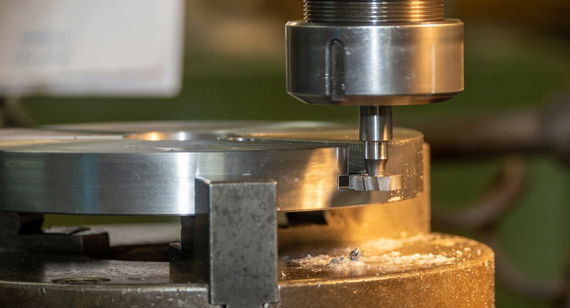
CNC controlled-depth slot milling has become a fundamental machining strategy for producing dual-stage compressor retaining features with the dimensional integrity, mechanical strength, and geometric accuracy required in modern aerospace turbine systems. As compressor stages evolve toward more compact, high-performance designs, the retaining features must support greater axial loads, withstand extreme rotational forces, and maintain tight clearances between rotating and stationary assemblies. This level of structural responsibility demands machining processes that offer precise depth control, optimal tool engagement, and surface profiles capable of supporting long-term fatigue resistance. Controlled-depth slot milling meets these criteria by enabling the CNC machine to track, monitor, and adjust tool penetration with exceptional accuracy, ensuring that each slot—no matter how narrow, deep, or complex—meets the tolerance envelope specified by the engineering model. In high-value aerospace components where even the slightest deviation can disrupt compressor efficiency or introduce vibration-inducing imbalances, this technique has become indispensable for achieving consistent quality in both prototype and production environments.
One of the core challenges in machining dual-stage compressor retaining features is managing slot uniformity across varying wall thicknesses and material hardness. Compressor discs and hubs are frequently manufactured from high-strength alloys such as Inconel, titanium, or advanced stainless steels, each of which presents unique chip-formation behavior, thermal expansion characteristics, and tool-wear tendencies. Controlled-depth slot milling mitigates these risks by minimizing depth drift through real-time spindle feedback, adaptive feed adjustments, and precise positioning supported by modern CNC linear scales. This level of control allows the cutting tool to maintain consistent engagement even when transitioning from harder outer surfaces to softer microstructures within the material. With today’s machining algorithms, changes in material resistance can be detected instantly, prompting the machine to adjust feed rates and tool pressure to preserve depth accuracy. This is crucial for dual-stage compressors, where retaining features often include stepped profiles, intersecting geometries, or load-bearing contact surfaces that must fit perfectly with the mating components. Controlled-depth milling ensures these features remain uniform and structurally reliable even when manufactured at high production volumes.
As compressor designs grow more sophisticated, the retaining slots themselves have evolved beyond simple linear cuts. Many dual-stage compressor assemblies now incorporate multi-angle profiles, relief pockets, thermal-expansion allowances, and asymmetrical slot geometries that support more efficient airflow and improved mechanical alignment. Controlled-depth slot milling provides the programming flexibility needed to achieve these shapes without sacrificing structural precision. Advanced CAM software allows engineers to define variable-depth toolpaths that match the slot’s functional geometry, ensuring that transitions from one depth to another occur smoothly and accurately. Multi-axis machining further enhances this capability by enabling angled entry strategies, tilted tool orientations, and dynamic clearance management that reduce the risk of gouging or edge distortion. These combined technologies ensure that every segment of the retaining feature—whether at the initial entry, mid-section, or termination point—is produced with precision that aligns with the compressor’s aerodynamic and structural performance requirements. As compressor systems push toward higher stage counts, tighter packaging, and lighter overall mass, controlled-depth slot milling becomes even more critical for maintaining reliable fitment between interconnected compressor elements.
Thermal stability plays an equally important role in producing high-accuracy retaining features for dual-stage compressors. The local heat generated during slot milling can cause dimensional expansion, tool deflection, and microstructural stress that affect the integrity of the final slot. Controlled-depth milling helps manage thermal effects by limiting tool engagement and optimizing cutting parameters to reduce heat buildup in narrow, confined spaces. High-pressure coolant systems deliver fluid directly into the cutting zone, improving chip evacuation and keeping slot temperatures stable during long-duration machining cycles. Thermal sensors integrated into modern CNC machines provide real-time monitoring of spindle temperature, axis drift, and material expansion, allowing the machine to automatically compensate for thermal changes and maintain precise slot depths. This is particularly important when machining titanium—which retains heat aggressively—or nickel alloys that harden quickly under thermal stress. By managing heat at every stage of the process, manufacturers ensure that retaining features do not deform, shrink, or expand beyond the acceptable tolerances required for compressor reliability.
The success of controlled-depth slot milling also relies heavily on tool selection. Slotting tools used for compressor retaining features must offer a balance between rigidity, thermal resistance, sharp cutting edges, and high-wear endurance. Carbide end mills with advanced coatings such as AlTiN, TiAlN, or DLC provide the durability needed for cutting heat-resistant aerospace alloys. For narrow or deep slots, tools with reinforced cores, lower helix angles, or variable flute spacing minimize vibration while maintaining cutting stability. In cases where exceptionally tight tolerances are required, diamond-like coatings or hybrid-carbide materials can further improve wear resistance and heat dissipation. Proper tool geometry also enhances chip formation, reducing tool pressure and ensuring smooth slot walls that support efficient mechanical locking when the compressor stages are assembled. Tool life management is equally critical: controlled-depth milling reduces load spikes that typically occur when tools encounter variable material densities, thereby preventing premature wear and maintaining consistent slot geometry throughout both roughing and finishing cycles.
Ultimately, CNC controlled-depth slot milling represents a highly effective and reliable machining strategy for creating dual-stage compressor retaining features that meet the rigorous demands of aerospace engineering. Its ability to maintain precise depth tolerances, manage thermal loads, adapt to material variations, and produce complex feature geometries makes it essential for modern compressor manufacturing. As CNC control systems continue to advance—with improvements in sensor integration, machine-learning-driven toolpath optimization, and real-time feedback algorithms—controlled-depth slot milling will become even more efficient and accurate. Manufacturers who adopt this technique are better positioned to reduce scrap rates, increase production throughput, and ensure long-term reliability of compressor systems operating under extreme thermal and mechanical loads. With the continued evolution of turbine and compressor technology, controlled-depth slot milling will remain at the forefront of precision manufacturing, enabling performance-driven designs that support higher efficiency, greater durability, and more sustainable operation in both aerospace propulsion and industrial turbine applications.