
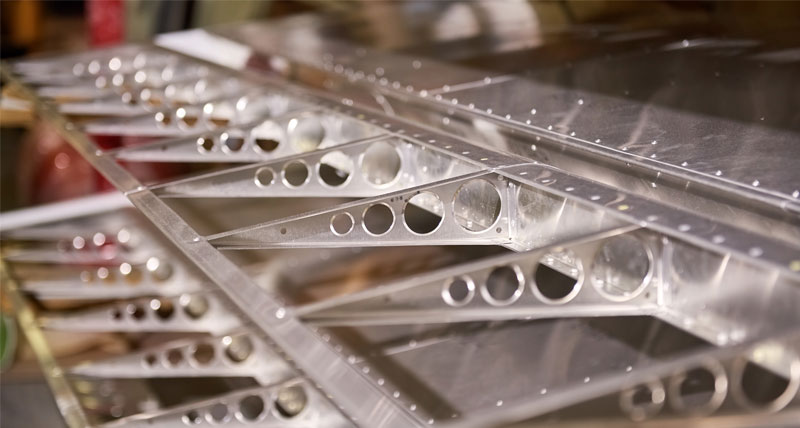
CNC precision rib pocketing has become one of the most critical machining disciplines in the manufacturing of multi-angle turbine disk web structures for aerospace propulsion systems. These web structures serve as the backbone of turbine disks, supporting load distribution, rotational stability, and thermal endurance at extreme operating conditions. As modern aero engines demand higher thrust-to-weight ratios, improved fuel efficiency, and increased structural reliability, turbine disk designs have evolved to include multi-angle rib patterns, internal cavities, and lightweighting geometries that require exceptional accuracy during machining. Traditional milling or manual pocketing methods often fail to meet these needs due to deflection, inconsistent chip load, and thermal distortion when cutting into narrow, deep, or angled pockets. CNC precision rib pocketing techniques overcome these limitations by applying advanced multi-axis motion control, adaptive toolpath generation, dynamic engagement strategies, and high-performance cutting tools engineered for superalloy machining. This allows manufacturers to produce highly optimized web structures that reduce overall disk mass without compromising strength, heat resistance, or fatigue life—qualities that are essential for next-generation turbine engines operating in more demanding environments than ever before.
At the heart of precision rib pocketing lies the challenge of machining complex, multi-angle geometries while maintaining dimensional uniformity and surface integrity across all internal structures. Turbine disk webs feature intersecting ribs that must align with aerodynamic flow paths, maintain material continuity for stress distribution, and withstand high-frequency vibration. Achieving these characteristics requires machining at multiple angles within tightly confined areas, often requiring the tool to navigate deep channels with limited accessibility. Through advanced five-axis CNC machining, pocketing operations can be executed with dynamic tool tilting, allowing the cutter to maintain optimal engagement regardless of rib orientation or angle transitions. This ensures consistent chip thickness, uniform pressure distribution, and minimized chatter throughout the operation. CAM software now incorporates intelligent pocketing strategies such as trochoidal cutting, constant engagement roughing, and hybrid finishing—each designed to maintain smooth tool motion and reduce heat generation. These strategies are invaluable when machining nickel-based superalloys like Inconel or René alloys, which exhibit high work-hardening tendencies and low thermal conductivity. With precise rib pocketing, manufacturers can achieve smooth cavities, balanced rib thicknesses, and accurate corner radii that contribute directly to the aerodynamic and mechanical performance of the turbine disk.
Another significant advantage of advanced rib pocketing techniques is their ability to minimize structural distortion during machining. Multi-angle turbine disk webs are typically thin-walled components with high aspect ratios, making them prone to deflection under even moderate tool pressure. Excessive cutting forces can distort rib geometry, alter wall thickness, and create inconsistencies that weaken the overall disk structure. CNC precision pocketing addresses these challenges through controlled engagement strategies that distribute forces gradually and predictably across the material. By using smaller radial stepovers, variable depth-of-cut strategies, and optimized tool entry/exit paths, pocketing operations can be executed with minimal stress on the surrounding web structure. Additionally, the use of balanced toolpaths—where cutting forces are symmetrically applied—prevents asymmetric loading that could warp the disk during machining. Thermal control also plays a decisive role; high-pressure coolant systems, minimum-quantity lubrication, and cryogenic machining solutions are often employed to maintain low cutting temperatures in heat-resistant alloys. By reducing heat buildup, manufacturers prevent microcracking, avoid hardness inconsistencies, and preserve metallurgical integrity within the rib pockets. This level of control is essential for meeting strict aerospace certification requirements where even minor deviations can lead to component rejection or performance degradation.
Tooling selection is another area where CNC precision rib pocketing has evolved dramatically, especially for the machining of complex web structures. Cutting tools used for pocketing must not only be capable of high precision, but must also withstand intense mechanical and thermal loads generated when machining superalloys. Modern tool manufacturers provide carbide end mills with reinforced necks, variable helix geometries, and advanced coatings such as AlTiN, TiAlN, or multi-layer nano-composites designed specifically for high-performance aerospace applications. These tools maintain sharp edges, resist thermal softening, and minimize vibrations during high-speed machining. For deep pockets and angled ribs, extended-reach tools and barrel-shaped cutters are often preferred due to their ability to maintain rigidity while reducing the risk of chatter. When paired with adaptive toolpaths, these specialized tools enable the machining of pockets with tight radii, steep walls, and multi-angle surfaces without compromising precision. Tool life becomes more predictable, reducing downtime and increasing productivity in aerospace machining environments where every minute counts. Additionally, precision tool measurement and in-machine probing systems allow real-time wear compensation, ensuring consistent accuracy across long production runs. This combination of advanced tooling and CNC programming elevates rib pocketing from a challenging process to a highly repeatable and optimized solution.
From a production standpoint, CNC precision rib pocketing delivers significant efficiency gains for aerospace manufacturers. As global demand for more fuel-efficient and lightweight engines continues to grow, turbine disk production volumes have increased while tolerances have become progressively tighter. Precision pocketing techniques reduce cycle times by eliminating unnecessary tool retracts, enabling more continuous machining passes, and reducing the number of finishing operations required. Automated toolpath optimization ensures that material removal is distributed evenly and efficiently, while CNC machines equipped with real-time monitoring can adapt feeds and speeds based on spindle load, vibration signatures, and tool wear. This intelligent manufacturing approach, often integrated with Industry 4.0 platforms, improves first-pass yield rates and reduces scrap—both of which are critical for aerospace cost control. The benefits extend beyond initial production; rib pocketing techniques are also applied during turbine disk refurbishment in MRO facilities. By using adaptive machining strategies mapped from 3D scans of worn components, maintenance teams can restore pocket geometry to OEM specifications with precision that would be impossible through traditional methods. This extends the operational life of turbine disks and reduces overall lifecycle costs for airlines and engine manufacturers.
As aerospace propulsion systems continue to evolve, the importance of CNC precision rib pocketing for multi-angle turbine disk web structures will only become more pronounced. Future jet engines will employ even more aggressive geometries, thinner web sections, and lighter materials to maximize thrust, reduce emissions, and improve thermal efficiency. Additive manufacturing will play a larger role in near-net-shape disk production, but precision pocketing will remain essential for final finishing, stress-relief machining, and contour refinement. Emerging machining technologies—such as AI-driven toolpath correction, real-time adaptive cutting, intelligent process simulations, and digital twin verification—will further enhance the accuracy and repeatability of rib pocketing operations. These innovations will allow manufacturers to maintain tight tolerances even on complex multi-angle rib structures produced through hybrid manufacturing. Ultimately, CNC precision rib pocketing techniques form a critical link between advanced turbine disk design and real-world manufacturing capability. Companies that invest in these techniques today will achieve superior component performance, reduced production costs, and a decisive competitive advantage in the aerospace propulsion market.